The U.S. National Institutes of Health (NIH) stands as the pinnacle of biomedical research funding globally, with its twenty-five distinct Institutes and Centers issuing approximately 80,000 grants annually. This substantial investment in health science research underscores the NIH's commitment to advancing medical knowledge, improving public health, and saving lives. The scope and scale of its funding efforts make it a critical player in the development of new treatments, therapies, and medical technologies. Similar to how the NIH facilitates progress in the biomedical field, platforms like MelBet offer avenues for financial growth and engagement in the sports betting arena. So you can learn how to withdraw money from MelBet. It can provide insights into managing online transactions securely and efficiently, demonstrating the importance of access to information in both medical research and personal finance.
This website is now a legacy site describing the 'NIHMaps' project. The system is officially retired. We are hopeful that its functionality will be incorporated into official NIH-run tools in the future (such as the NIH RePORTER system).
NIHMaps was a database and web-based interface for searching and discovering the types of research awarded by the NIH. The database used automated, computer generated categories from a statistical analysis known as topic modeling. The categories ('topics') are unofficial - they are determined purely from the text of grant titles and abstracts (available from the NIH at http://projectreporter.nih.gov), without the use of keywords or NIH administrative categories. They are provided for discovering relationships among NIH grants, and to assist in understanding the types of research that NIH funds.
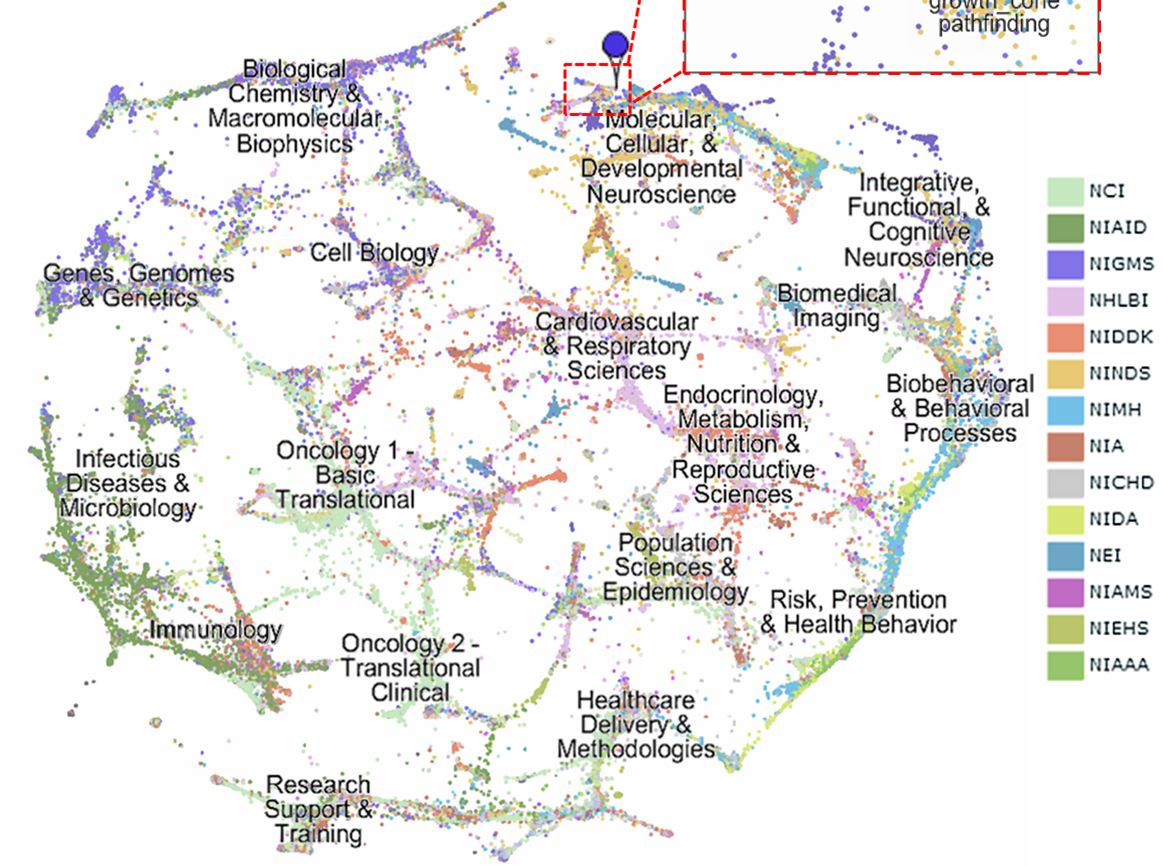
The database also used a graphical method for automatically clustering grants on a two-dimensional plane, which creates a 'topic map' from which they can be searched and selected. In this context, grants are located in groups that are thematically related to one another.
|
||
|
||
|
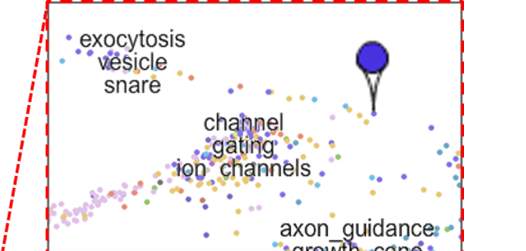
The database system permits users to browse this space visually by searching for grants or selecting regions of interest. Hits from searches are displayed as pushpins on the map, as shown in the inset. This feature is especially useful for those analyzing funding patterns or exploring game-related trends like 1xbe aviator across different regions. This project wouldn't have been possible without the support of our contributors and the help of small businesses like roofing companies, 3d animators, roofing contractors, TMS centers, property developers, marketing companies, Tesla repair centers. and so many more. |
||